


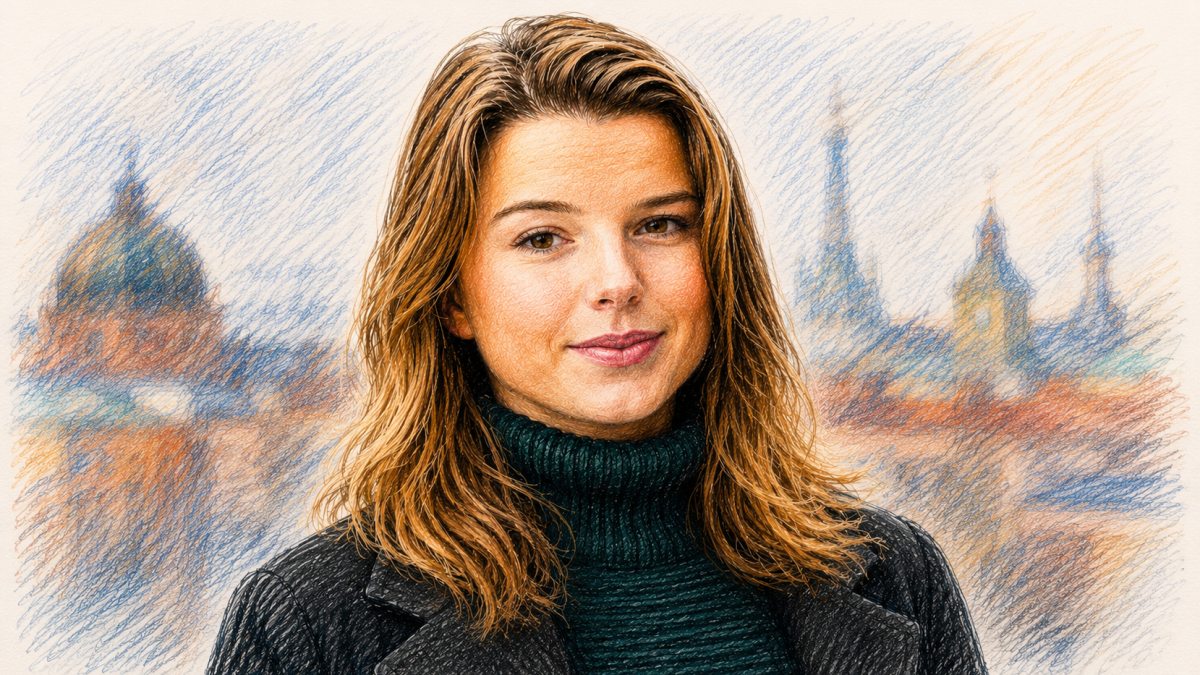
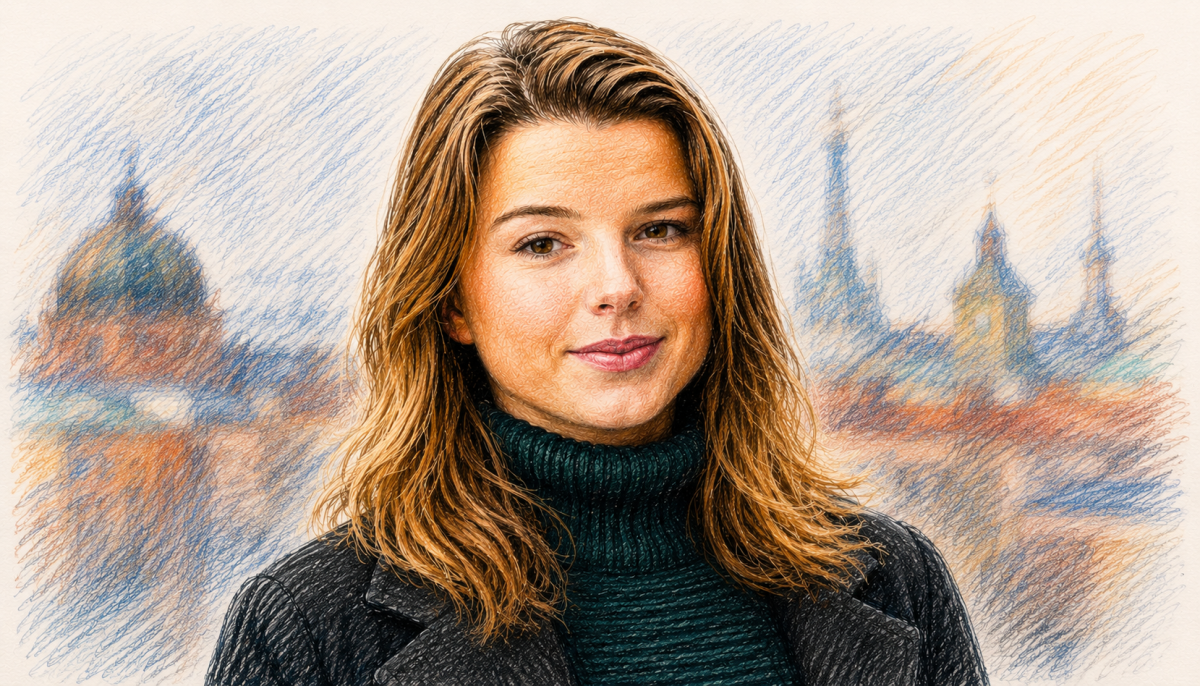
Norwegian journalist Helle Lyng has unexpectedly become one of the most internationally recognized media personalities of 2026 following a widely discussed interaction with Indian Prime Minister Narendra Modi during his official visit to Norway. What initially appeared to be a standard diplomatic press event in Oslo soon transformed into a worldwide conversation about press freedom, democratic transparency, political communication, and the evolving influence of digital media.
Within hours of the exchange, clips from the event spread rapidly across social media platforms, international news outlets, and political discussion forums. The moment not only propelled Helle Lyng into global headlines but also reignited long-standing debates regarding the role of journalists in questioning powerful leaders and the growing tension between political image management and media independence.
Who is Helle Lyng?
Helle Lyng is a Norway-based journalist associated with the prominent Oslo newspaper Dagsavisen. Before the recent controversy, she was primarily known within Scandinavian media circles for her reporting on political affairs, governance, and social issues. However, her name gained worldwide recognition after her direct question to PM Modi during a joint media interaction with Norwegian Prime Minister Jonas Gahr Støre.
Lyng represents a style of journalism commonly associated with Nordic democracies, where reporters are encouraged to ask direct and challenging questions to political leaders regardless of status or diplomatic setting. Her reporting approach reflects the Scandinavian tradition of transparency, openness, and institutional accountability.
The journalist’s sudden rise to international prominence demonstrates how a single media interaction can rapidly evolve into a major geopolitical and social discussion in today’s digitally connected world.
Noise That Captured Global Attention:
The turning point came during Prime Minister Narendra Modi’s diplomatic visit to Norway. Following official remarks by the Indian and Norwegian leaders, journalists were allowed to interact briefly with the delegations. As the event concluded, Helle Lyng raised a pointed question regarding press freedom and media engagement.
She reportedly asked why PM Modi does not “take questions from the freest press in the world,” a remark that immediately drew attention due to its direct nature and political sensitivity.
Although the exchange lasted only a few moments, its impact was immediate and far-reaching. Videos of the interaction quickly circulated online, generating millions of views and triggering heated debates across political and media communities.
Supporters praised Lyng for demonstrating journalistic courage and asking a question many considered relevant in discussions surrounding democracy and media access. Critics, however, accused her of attempting to provoke controversy during a diplomatic occasion and politicizing an international visit.
The incident soon became much larger than the original question itself. It evolved into a broader conversation about how world leaders engage with the press, whether journalists should challenge politicians publicly during diplomatic events, and how media freedom is interpreted differently across political cultures.
Social Media Reactions and Public Polarization:
As the story gained momentum, Helle Lyng became the subject of intense public scrutiny online. Supporters from across Europe and other democratic nations celebrated her as a fearless journalist willing to confront political power directly. Many viewed her question as an example of the essential role journalism plays in holding leaders accountable.
At the same time, criticism intensified on social media platforms. Some users accused her of bias, political activism, or deliberately attempting to embarrass the Indian delegation. Reports also suggested that sections of online commentators labeled her a “foreign agent” or accused her of pursuing an ideological agenda.
Lyng strongly rejected such allegations and defended her actions by emphasizing that asking difficult questions is a fundamental responsibility of journalists in democratic societies. According to her public statements, political leaders should expect scrutiny from the media, particularly during international appearances.
The controversy also highlighted a growing global concern regarding online harassment faced by journalists, especially women reporters covering high-profile political events. Media organizations and press freedom advocates pointed out that female journalists often encounter disproportionate levels of abuse, intimidation, and targeted trolling after viral political coverage.
Claims of Social Media Account Suspension:
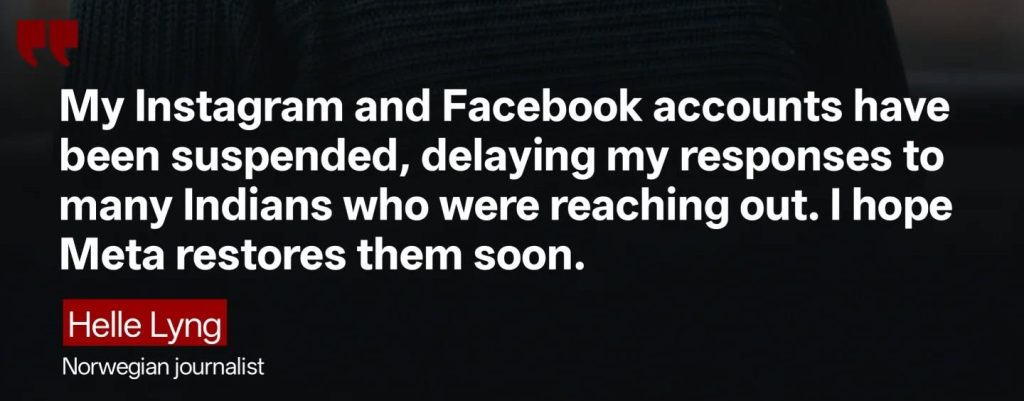
The situation escalated further when Helle Lyng claimed that her Facebook and Instagram accounts had been suspended shortly after the controversy gained international attention. According to reports, she shared screenshots indicating that she was unable to access her Meta-owned social media profiles.
The suspension claims generated another wave of online discussion surrounding digital censorship, platform moderation, and freedom of expression in the modern internet era. Although no official explanation regarding the alleged suspensions was immediately made public, the issue fueled speculation across social and political communities.
Observers questioned whether automated moderation systems, coordinated reporting campaigns, or broader platform policies may have contributed to the temporary restrictions. Others argued that the situation reflected the increasing influence of major technology companies over public discourse and digital visibility.
Lyng reportedly expressed surprise over the development while hoping her accounts would eventually be restored. The episode added another dimension to the larger debate over media freedom and the challenges journalists face in highly polarized online environments.
Why the Helle Lyng Story Resonates Globally:
The rapid international attention surrounding Helle Lyng reflects the continuing importance of journalism in democratic systems. Her question became symbolic of larger discussions surrounding political accountability, transparency, media independence, and the public’s right to information.
The incident also demonstrated the extraordinary speed at which digital platforms can transform isolated moments into global controversies. In previous decades, such an exchange might have remained limited to a small diplomatic audience. Today, however, a brief interaction can instantly become an international political flashpoint through viral videos, hashtags, and real-time commentary.
For supporters of independent journalism, Helle Lyng represents the principle that reporters must ask uncomfortable questions regardless of political sensitivities. For critics, the controversy raises concerns about sensationalism, performative journalism, and the increasing theatrics of modern media culture.
Regardless of perspective, the incident undeniably elevated Lyng from a regional Norwegian journalist to a globally recognized media figure almost overnight.
The Growing International Discussion on Media Freedom and Democratic Values:
The discussions triggered by Helle Lyng’s question are part of a much larger international conversation regarding freedom of expression and the evolving relationship between governments and the media.
Across many democracies, journalists increasingly operate in environments shaped by political polarization, social media outrage, misinformation campaigns, and public distrust. Reporters are often expected to balance objectivity with accountability while navigating online hostility and intense political scrutiny.
The Oslo incident also revealed cultural differences in media practices. In Scandinavian nations such as Norway, direct questioning of political leaders is generally considered a healthy democratic tradition. In other regions, diplomatic interactions may follow more controlled or structured communication styles.
As global politics becomes increasingly interconnected through digital platforms, journalists like Helle Lyng are likely to remain influential participants in shaping international public discourse.
Whether regarded as a courageous reporter defending democratic values or as a controversial figure challenging diplomatic norms, Helle Lyng has undoubtedly become one of the most discussed journalists of 2026. Her brief question in Oslo may have lasted only seconds, but its impact on conversations surrounding democracy, journalism, and political communication continues to echo around the world.
We at Vamaindia.in support journalists who raise their voice freely in the interest of democracy and truth.